
 National high tech enterprise
 chinese

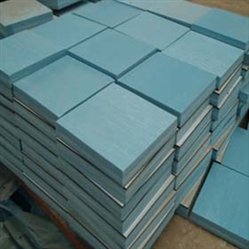
Application of testing machine in construction industry
The application of testing machine in the construction industry mainly focuses on the strength test of metal pipes, plastic pipes, floor tiles, concrete, etc.
detailed information
The application of testing machine in the construction industry mainly focuses on the strength test of metal pipes, plastic pipes, floor tiles, concrete, etc.
1、 Concept of strength
It refers to the ability of materials to resist damage under external force (load).
2、 Type of strength
According to the stress form (as shown in the figure), it can be divided into four types: compressive strength, tensile strength, bending (bending) strength and shear strength.
3、 Calculation of strength
Calculation formula of compressive strength, tensile strength and shear strength
f = F/ A
Where, f - compressive, tensile and shear strength of the material (Pa MPa).
F --- Maximum load when the test piece is damaged (N).
A --- area of test piece (m2 or mm2).
The bending (bending) strength of materials is related to the stress, section shape and supporting conditions of materials. For rectangular section, when a concentrated load is applied in the middle and supported at both ends, its bending (bending) strength is calculated with the following formula: f=3 FL/2 b h2
4、 Strength grade
For the convenience of application, several grades are divided according to the strength value of materials. Brittle materials are mainly classified by compressive strength, such as cement, concrete, brick, etc. Plastic materials and ductile materials are mainly classified by tensile strength, such as steel.
5、 Specific strength
Specific strength refers to the ratio of material strength to bulk density (f/ ρ 0) 。 It is an important index to measure the lightweight and high strength properties of materials.
6、 Deformability
1. Elasticity: The deformation that the material can completely recover is called elastic deformation. Materials with such deformation characteristics are called elastic materials.
2. Plasticity: The deformation that the material cannot recover is called plastic deformation. Plastic materials are called plastic materials.
3. Brittleness: under the load, the material has no obvious omen and is characterized by sudden failure.
4. Toughness: toughness, also known as impact toughness, is the property that materials can withstand large deformation without sudden failure under impact and vibration loads.
 粤ICP备10210944号